
Shipping fragile ceramics, glass bottles, artisanal home fragrances, and precision electronics requires internal cushioning that immobilizes the product inside its outer carton. Whenever an item can shift or collide with adjacent pieces during transit, kinetic energy transfers directly into fragile edges, resulting in shattered goods and disappointed customers.
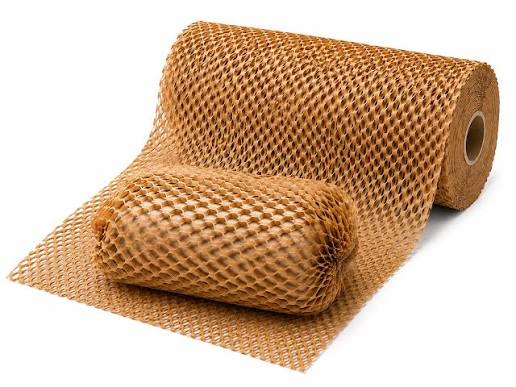
In recent years, 3D die-cut ietinamais šūnu papīrs has revolutionized protective wrapping for design-conscious brands. As the kraft paper roll is stretched under tension, its precision slits expand into a three-dimensional hexagonal honeycomb matrix that locks onto itself without requiring adhesive tape or cutting tools.
How Hexagonal Paper Cells Absorb Impact and Vibration
The geometry of stretched honeycomb paper mimics natural structural lattices. When wrapped in two or three overlapping layers around a glass jar or ceramic mug, the raised paper cells interlock to form a spring-like air cushion. This structure dampens high-frequency road vibrations while preventing multiple items in the same box from clinking against one another.
Beyond mechanical protection, honeycomb kraft paper dramatically improves the customer unboxing experience. Instead of wrestling with layers of static-clinging plastic film and tape, the recipient unwraps a clean, tactile paper sleeve that reinforces eco-friendly brand values and goes straight into paper recycling.
Combining Bubble Film and Foam Rolls for Heavy Industrial Protection
While honeycomb paper excels for retail gifts, cosmetics, and tableware, heavy mechanical components, framed mirrors, and sensitive electronics often require moisture-impervious barrier cushioning. High-retention burbuļplēves iepakojums and polyethylene foam rolls provide long-duration air cushioning that does not compress under heavy static loads during multi-week freight storage.
By stocking a complete range of professional iepakojuma materiāli – including stretch films, acrylic and hot-melt packing tapes, and protective void fillers – warehouse teams can tailor their wrapping protocol to the exact risk profile of every shipment.
Best Practices for Zero-Damage Fragile Packing
Preventing transit breakage relies on consistent packing station standards rather than simply adding more filler at random.
- Individual Item Separation – Wrapping each fragile piece separately in honeycomb paper or bubble wrap so glass or ceramic surfaces never touch directly.
- Five-Centimeter Perimeter Buffer – Maintaining a uniform cushioning zone between the product and all six interior walls of the corrugated shipping box.
- Immobilization Shake Test – Ensuring that once the top flaps are closed, zero internal movement can be felt when the parcel is gently tilted.
- High-Tack Seam Sealing – Using weather-resistant packing tape across the center seam and H-taped edges to preserve box rigidity in humid transit hubs.
Balancing Presentation Speed and Transit Security
Whether a business ships fifty handmade candles a week or thousands of industrial spare parts a month, investing in the right protective wrapping pays for itself immediately by eliminating replacement shipments, refund administration, and negative delivery reviews.