
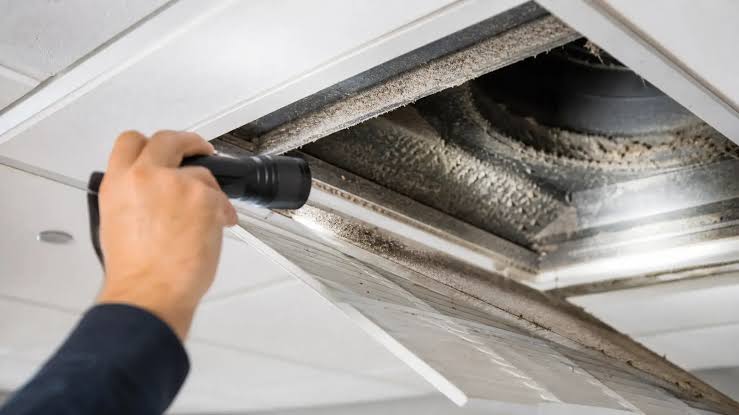
Unlike a leaky kitchen faucet that drips loudly onto stainless steel or a furnace blower motor that squeals like a startled banshee when its bearings fail, your building’s ductwork suffers in complete silence. Hidden behind plaster walls, above drop-ceiling tiles, and beneath subfloors, miles of supply trunks and return plenums quietly move conditioned air through your rooms every single day. Because you cannot casually glance inside a sheet metal trunk line while walking past the hallway thermostat, buildup inside your HVAC distribution network tends to accumulate out of sight and out of mind; until your comfort, air quality, or energy bills start waving bright red flags.
The Mystery of Dust That Returns Twenty Minutes After Cleaning
Every homeowner and office janitor knows the normal rhythm of weekly dusting. When your air distribution system is clean and properly sealed, wiping down a dark walnut coffee table or glass conference desk keeps surfaces spotless for days. However, if you notice a fine layer of gray particulate settling back onto furniture within hours of running the vacuum, your supply registers are actively blowing debris back into the room.
When dust buildup inside horizontal branch runs gets thick enough, the sudden rush of air from your blower motor kicks up loose particles every time a heating or cooling cycle starts. You can often spot physical proof right on your ceilings and walls: look closely around your supply vents for dark, smudged “ghosting” halos framing the metal grilles. Those telltale gray streaks happen when dirty air exits the register at high velocity and deposits microscopic soot, dander, and dust directly onto surrounding paint and drywall.
Uneven Room Temperatures and Weak Register Airflow
Walk from your kitchen into your upstairs bedroom or across a commercial office floor—does one space feel like a tropical greenhouse while the adjacent room feels like a walk-in cooler? While thermostat placement and window exposure play a role, dramatic temperature imbalances frequently point to physical restrictions or leaks inside your ductwork. Over years of operation, heavy debris accumulation; combined with dislodged internal duct liner or crushed flex duct runs, chokes off static pressure to distant branch lines.
Hold the back of your hand near each supply register while the system fan is running in the “ON” position. If air trickles out of far bedrooms or corner offices like a tired sigh while central vents roar like a wind tunnel, something is obstructing or diverting that airflow. In many properties we inspect, debris piles up at ninety-degree takeoffs and dampers, starving distant zones of conditioned air and forcing the central equipment to run overtime trying to satisfy the thermostat. Knowing when to book a professionalair duct cleaning service restores balanced cubic-feet-per-minute airflow across every zone in your floor plan.
Strange Odors Every Time the Blower Kicks On
Your nose is one of the best diagnostic tools you own when it comes to HVAC health. Clean ductwork smells like absolutely nothing; just neutral, fresh air. If every heating or cooling cycle greets you with a wave of stale, musty, earthy, or lingering pet odors, those smells are living inside your air handler and duct network. Porous dust layers inside return plenums act like millions of tiny sponges, absorbing cooking grease, cigarette smoke from previous owners, pet dander, and household chemicals.
Whenever humidity shifts or warm air passes over those coated metal surfaces, trapped odor molecules volatilize and circulate straight back into your breathing space. Worse still, if condensation from an evaporator coil or a minor roof leak has dampened dust inside a dark plenum, musty smells can signal microbial growth thriving on organic debris. Masking the scent with plug-in air fresheners only adds volatile organic compounds to the mix without removing the source inside the ducts.
Rising Utility Bills Without a Change in Weather or Habits
HVAC equipment accounts for nearly half of a typical building’s total energy consumption, and airflow efficiency governs how hard that equipment has to work. Think about trying to breathe through a cocktail straw while jogging up a flight of stairs; your lungs have to work exponentially harder just to move basic oxygen. That is precisely what happens to your furnace and air conditioner when dust coats the evaporator coil fins, packs into the squirrel-cage blower wheel, and lines the interior walls of your trunk lines.
As internal friction increases and heat transfer efficiency drops, your system must run fifteen to thirty percent longer per cycle to hit the exact same temperature setpoint on your wall thermostat. If you compare your current gas or electric usage against the same billing month from two or three years ago and see a steady upward creep despite mild weather, choked airflow inside your ductwork and air handler is often the invisible culprit draining your budget.
Recent Renovations, New Pets, or Unknown Service History
Sometimes the clearest sign your ducts need attention has nothing to do with symptoms and everything to do with building history. If you recently remodeled a kitchen, sanded hardwood floors, replaced drywall, or had insulation blown into the attic, fine construction dust almost certainly bypassed your return filter and settled deep inside your ductwork. Sawdust and gypsum powder are dense, abrasive, and notorious for clogging blower motors and irritating airways long after the contractors pack up their trucks.
Similarly, if you just purchased an existing home or leased a commercial space and have zero documentation showing when the ductwork was last serviced, you are inheriting decades of previous occupants’ skin cells, pet fur, and mystery debris. Starting fresh with a thorough negative-pressure cleaning ensures you are breathing your own clean air rather than someone else’s history.
Taking Control of Your Building’s Hidden Airways
Your ductwork should work silently in the background to keep your indoor environment comfortable, healthy, and energy-efficient, not quietly circulate years of trapped dust and drive up your monthly utility bills. If you recognize dusty register halos, stubborn room-to-room temperature swings, lingering odors, or sluggish airflow in your home or business, those are clear signals that your system is overdue for professional care. Reach out today to schedule a complete ductwork inspection and source-removal cleaning so you can breathe easier in every single room.