
You might not notice hard water right away. At first, it’s just a few white spots on the bathroom tap or a cloudy film on your favorite drinking glasses. Then the showerhead starts collecting mineral deposits, soap seems harder to rinse away, and the washing machine needs a little more attention than it used to. These small annoyances can become part of everyday life, but they don’t have to stay that way.
Understanding your home’s water is the first step toward finding a practical solution. For many households, water softening can make cleaning easier, reduce mineral scale, and help protect plumbing fixtures. The trick is choosing equipment that suits your water supply, household habits, and budget instead of buying the first product that promises perfect results.
What Makes Water Hard in the First Place?
Hard water contains higher levels of dissolved minerals, particularly calcium and magnesium. These minerals occur naturally as groundwater moves through rocks and soil. The amount present varies by location, which explains why one household might experience stubborn scale while another nearby has very few issues.
Hardness isn’t usually a sign that water is contaminated. In many cases, it is mainly a practical concern, affecting how water behaves during cleaning, washing, and heating. However, the right approach depends on the mineral concentration and the needs of the property.
A simple water hardness test can help establish what’s happening. You can use a suitable home test kit for an initial indication, or arrange professional testing when you need more detailed information. If you rely on a private well, testing may also be appropriate for other water quality factors, not just hardness.
Knowing the actual hardness level gives you a useful starting point. Without that information, it’s easy to overspend on a system that is larger or more complicated than necessary.
The Everyday Effects of Hard Water
The most familiar hard water problems often show up during ordinary household chores. Soap may produce less lather, mineral spots can remain on glassware, and deposits may collect around faucets, showerheads, and kettle interiors. These issues can be frustrating, especially when you have just cleaned everything and the marks return a day later.
Scale can also accumulate inside water heaters, pipes, and appliances that heat water. Depending on the severity and the equipment involved, this buildup may reduce efficiency or increase maintenance needs over time. It’s one reason homeowners often start exploring water treatment after noticing repeated deposits.
Laundry is another common complaint. Hard water can affect how detergents perform, and fabrics may feel less pleasant to some people after repeated washing. Still, the results vary with detergent type, washing temperature, fabric, and the actual hardness level.
It’s worth keeping expectations realistic. A water softener can address hardness minerals, but it won’t solve every water-related issue. If water has a sulfur smell, unusual discoloration, or a suspected contamination problem, those symptoms require separate investigation.
How Water Softener Systems Work
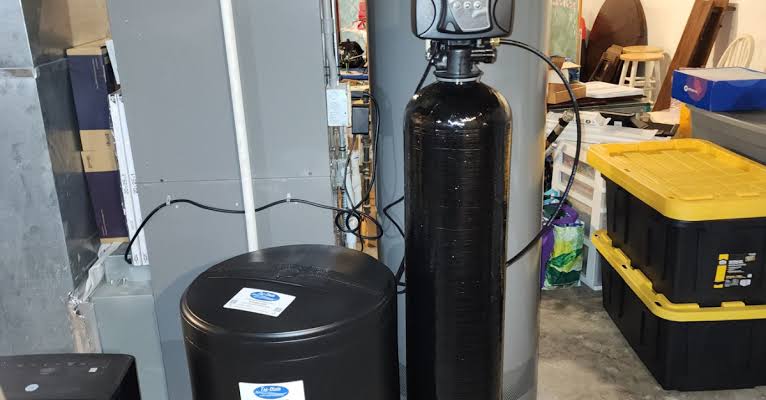
Modern water softener systems are designed to reduce the concentration of hardness minerals before water reaches the fixtures and appliances they serve. Many conventional systems use a process called ion exchange.
Inside the softener, resin beads hold sodium or potassium ions. As hard water passes through the resin, calcium and magnesium are exchanged for those ions. Over time, the resin becomes saturated with hardness minerals and needs to be regenerated so it can continue working.
During regeneration, a brine solution is commonly used to restore the resin’s ability to soften water. The system then flushes the unwanted minerals away through a drain, following its design and operating cycle. Depending on the model, regeneration may occur according to a timer, water usage, or measured demand.
This process is well established, but not every household needs the same equipment. System capacity, water hardness, daily consumption, peak demand, and installation conditions all matter. A unit that works beautifully for a small family might be inadequate for a larger household with several bathrooms.
Understanding Salt-Based Water Softeners
For homes with significant hardness, salt-based water softeners are a common option because they use ion exchange to remove calcium and magnesium from the treated water. Despite the name, these systems don’t simply pour salt into the water supply. Salt is generally used to prepare the brine that regenerates the resin.
There are a few practical details to consider before choosing this type of system. You’ll need room for the equipment, access to a suitable drain, and a plan for keeping the salt supply replenished. Regeneration also uses water, so operating requirements should be part of your decision.
Another consideration is sodium. Conventional ion-exchange softening increases sodium levels in treated water, with the amount depending partly on the original hardness. People following a medically prescribed sodium restriction should seek appropriate advice about drinking water. A separate drinking-water treatment option may be suitable in some situations.
Some households choose potassium chloride instead of sodium chloride, where compatible with their equipment. It can be more expensive and still requires careful handling and maintenance. Ask the installer to explain the operating costs rather than focusing only on the initial purchase price.
Choosing a System That Fits Your Home
Before comparing brands, think about how water is used throughout your home. How many people live there? How many bathrooms are used regularly? Does your property rely on municipal water or a private well? Are mineral deposits the main concern, or have you noticed other changes as well?
These questions help establish the right system size and whether additional treatment is needed. A professional water assessment can identify the hardness level and highlight any conditions that could affect the equipment, such as elevated iron in certain supplies.
It’s also sensible to compare more than the advertised price. Consider the purchase and installation costs, salt consumption, regeneration water use, replacement parts, warranty terms, and routine servicing. A cheaper unit may cost more over several years if it’s poorly matched to your household.
Ask about bypass valves, controls, and what happens during maintenance. You should be able to isolate the softener for servicing without making the entire plumbing system difficult to use. Clear instructions and dependable local support can make a real difference once the equipment is installed.
Keeping Your Water Softener in Good Shape
Like any household appliance, a softener performs best when it’s maintained. Check the salt level according to the manufacturer’s instructions and use the salt type recommended for your model. Occasionally inspect the brine tank for unusual buildup or salt bridging, where a hard crust prevents salt from dissolving properly.
Pay attention to changes in water feel, recurring scale, or warning indicators on the control panel. These signs don’t always mean the system has failed, but they can suggest that regeneration, settings, or maintenance need attention.
Follow the recommended service schedule, especially if the system treats water with characteristics that can affect its performance. If the water comes from a well, periodic testing remains important because softening alone doesn’t guarantee that the supply is safe to drink.
A Practical Investment in Everyday Comfort
Choosing a water softener doesn’t need to become an overwhelming home improvement project. Start with a test, understand the problems you’re trying to solve, and compare systems based on your actual water use. That simple process can save time, money, and frustration.
The best solution isn’t necessarily the biggest or most expensive model. It’s the one that handles your home’s hardness level reliably, fits your plumbing, and remains affordable to operate and maintain.
Over time, the benefits may appear in small, satisfying ways: fewer mineral spots, easier bathroom cleaning, and less scale accumulating around fixtures. No single system eliminates every water concern, but the right one can make daily routines feel a little less complicated. And honestly, when a home runs more smoothly, even the smallest improvements are worth appreciating.